If you’ve been struggling with chronic pain, tendon injuries, or slow recovery from surgery, you may have heard about Platelet-Rich Plasma (PRP) injections. PRP has gained popularity in sports medicine and orthopedics because it uses your own blood to stimulate healing. But here’s the catch — PRP injections often cost $1,000 to $3,000 per treatment, and most insurance plans don’t cover them.
At Straight to the Point Dry Needling, we offer an alternative that stimulates a similar healing response — Dry Needling.
What Is PRP?
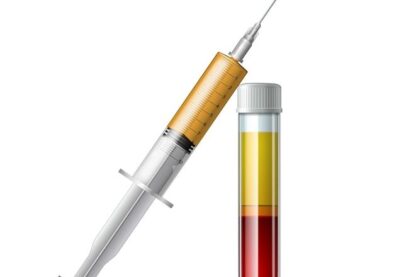
PRP stands for Platelet-Rich Plasma. A healthcare provider draws your blood, spins it in a centrifuge to separate plasma and platelets, then reinjects the concentrated plasma into the injured area. The idea is to deliver growth factors directly to the site of injury to accelerate tissue repair.
While effective for some patients, PRP is invasive, expensive, and not easily repeated on a routine basis.
How Does Dry Needling Compare?
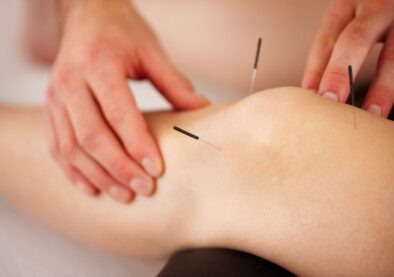
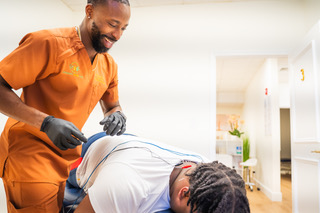
Dry Needling involves placing a thin, sterile needle into tight muscles, scar tissue, or near tendons and ligaments. Unlike PRP, there’s no blood draw and no injection of plasma — but here’s where it gets interesting:
By creating tiny micro-injuries in the tissue, Dry Needling signals the body to send blood, plasma, and natural growth factors to the site. This process kickstarts the body’s own repair mechanisms, similar to how PRP works.
Think of Dry Needling as a way to stimulate your body’s PRP-like response naturally, without the high cost or downtime.
Tension headaches and migraines related to muscle tightness
Whiplash and neck strain after car accidents
Shoulder impingement and frozen shoulder
Benefits of Dry Needling vs PRP ✅ Affordable — A fraction of the cost of PRP injections. ✅ Accessible — No blood draw or lab work needed. ✅ Repeatable — Can be done routinely for ongoing pain management. ✅ Versatile — Effective for muscle pain, tendon injuries, scar tissue, and post-surgical recovery. ✅ Direct Access — At STTP, you don’t need a physician referral.
The Bottom Line
PRP and Dry Needling both aim to harness the body’s natural healing power. PRP does it by concentrating platelets and reinjecting them. Dry Needling does it by creating controlled microtrauma that brings blood, plasma, and growth factors to the exact area that needs repair.
If you’re looking for an effective, science-backed, and affordable alternative to PRP, Dry Needling may be the solution you’ve been searching for.
At Straight to the Point Dry Needling, we specialize in helping patients who have tried everything else — from injections to surgeries — and are still looking for relief.
Dr. West is a licensed Doctor of Physical Therapy, NASM Certified personal trainer, and former collegiate athlete with a background in competitive bodybuilding. Known for his hands-on style, he specializes in dry needling, manipulation/joint mobilizations, and mobility restoration. He founded STTPDN to give patients direct access to effective care that produces measurable results.
 by
by 

Comments
Elinor1980
March 1, 2026Promote our products—get paid for every sale you generate!
admin
March 3, 2026what type of products?